 Visit Tianyar
From Ubud
≈ 2 h 15 m · 78 km
Head northeast via Bangli and Kubu on the Amlapura–Singaraja coast road. Easiest as a pre-dawn departure around 03:30.
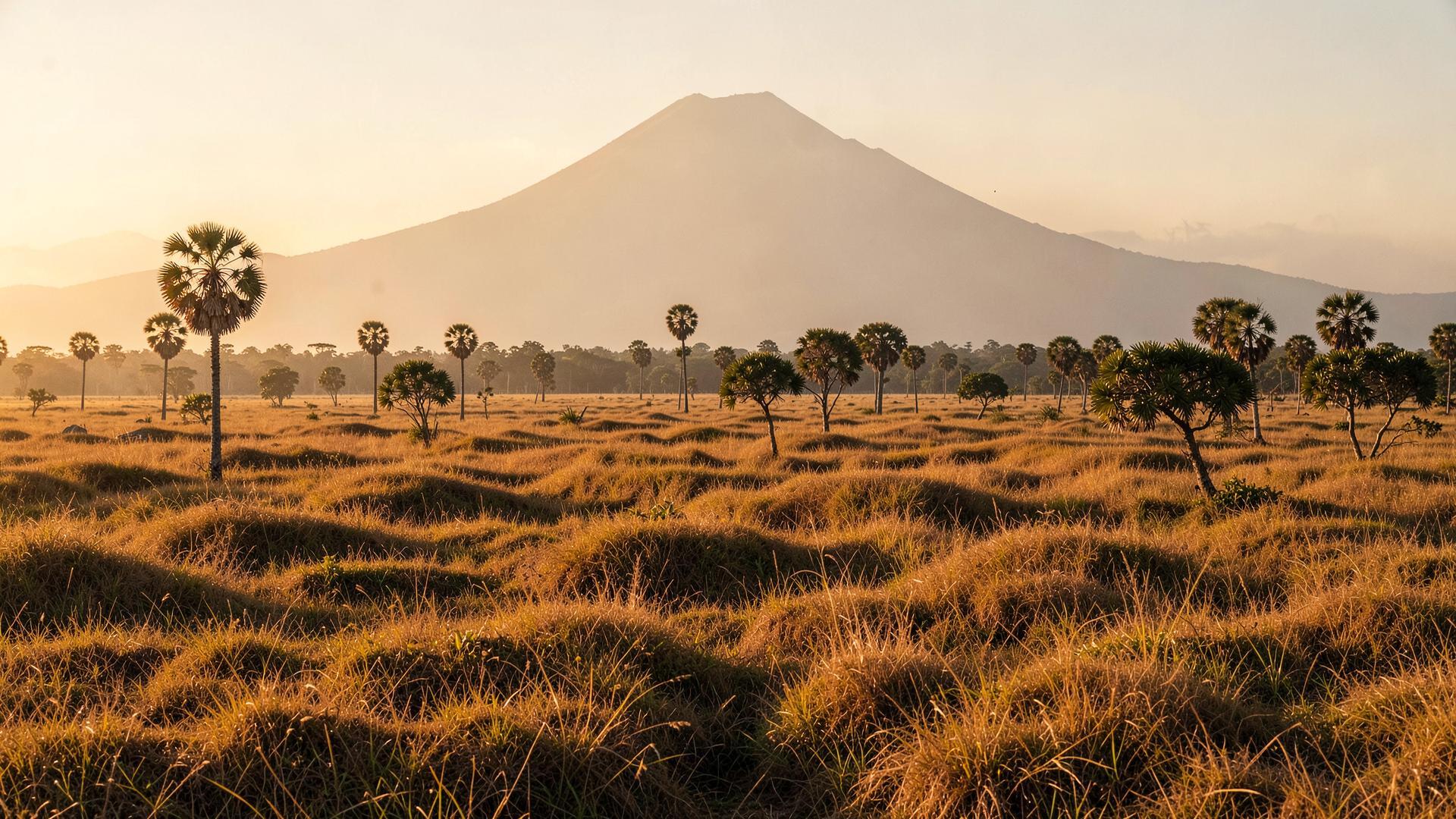
Karangasem · East Bali
A dry, wide-open grassland between Mount Agung and the black-sand coast — the closest thing Bali has to an African savanna. Free to visit, no ticket booth, no crowds: just sunrise light, lontar palms and a lot of sky.
Savana Tianyar sits on the dry northeastern flank of Mount Agung, in Kubu district, Karangasem. Volcanic ash and a rain shadow keep this stretch of Bali far drier than the island's terraced south, so instead of rice fields you get tufted grass, scattered lontar palms and bare volcanic ridgelines.
The savanna is not a managed park. It is grazing and community land that visitors are welcome to walk across, crossed by dirt tracks used by cattle herders. That informality is exactly why it photographs so well — and why the usual rules of respect apply.
In the dry season the grass turns copper and the plain reads almost African. After the first rains it flushes green within two weeks, which is a completely different, and much less photographed, look.
The savanna spreads along the coastal road between Kubu and Tianyar village. There is no single gate — you park on the shoulder near a track and walk in.
≈ 2 h 15 m · 78 km
Head northeast via Bangli and Kubu on the Amlapura–Singaraja coast road. Easiest as a pre-dawn departure around 03:30.
≈ 45 m · 27 km
Straight up the coast road through Tulamben. The most comfortable base if you want sunrise without a night drive.
≈ 3 h 15 m · 110 km
Toll road to Sanur, then the coastal route east. Realistically an overnight trip rather than a day trip.
Savana Tianyar, Tianyar Barat, Kubu, Karangasem — 8°13'30"S, 115°30'28"E. The pin sits on the main grassland; park on the shoulder and walk in.
Open in Google MapsThe plain faces east toward the sea and west toward Agung, so it works at both ends of the day — but for different pictures.
Sunrise
05:45 – 07:15
Low side light rakes across the grass tufts and separates every ridge. Morning haze often stacks behind Agung. This is the window worth the early alarm.
Golden hour
17:00 – 18:15
Warmer and dustier, with backlit palms and long shadows toward the coast. Better for silhouettes than for detail in the grass.
Midday
10:00 – 15:00
Harsh, flat and genuinely hot — over 34 °C with no shade. Fine for scouting, poor for photographs.
Dry season (May–October) gives the copper-gold grass most people come for. February–April is green and dramatic after storms, with far fewer visitors.
Four reliable positions, all within a 20-minute walk of the coast road. Coordinates are approximate to about 30 m — treat them as a starting point, not a fence line.
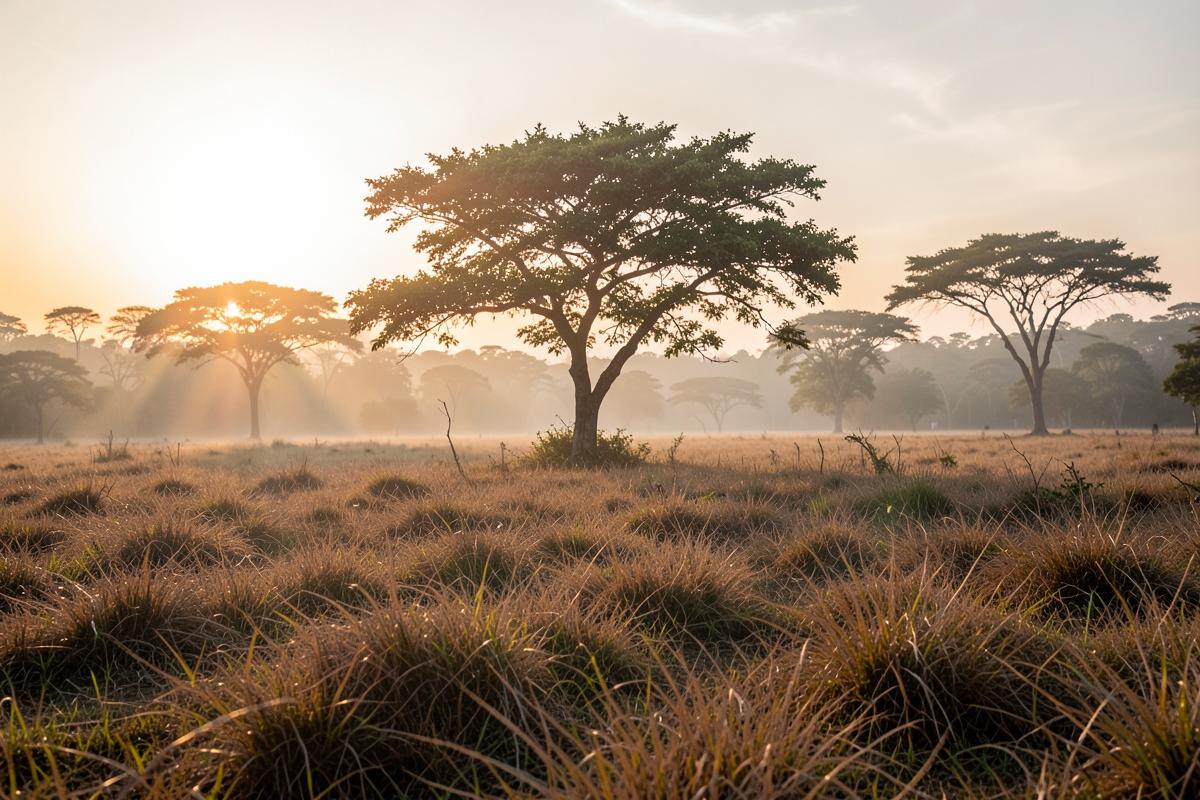
A single tall lontar palm standing clear of the tree line, with Agung behind it. The classic Tianyar frame; works best at 85–135 mm compressed.
-8.2064, 115.5342A low rise about 400 m in from the road that reveals the full sweep of the plain down to the sea. Good for wide panoramas and drone-free elevation.
-8.2039, 115.5388A pale dirt track cutting diagonally through the grass toward the volcano. Strong foreground for 24–35 mm environmental portraits.
-8.2091, 115.5327Where the grassland breaks into black volcanic sand and the Lombok Strait. Pairs the savanna and the sea in one frame.
-8.2011, 115.5404Tianyar sits neatly at the top of a one-day east-coast circuit. Sunrise on the savanna, water in the middle of the day, gardens before the drive back.
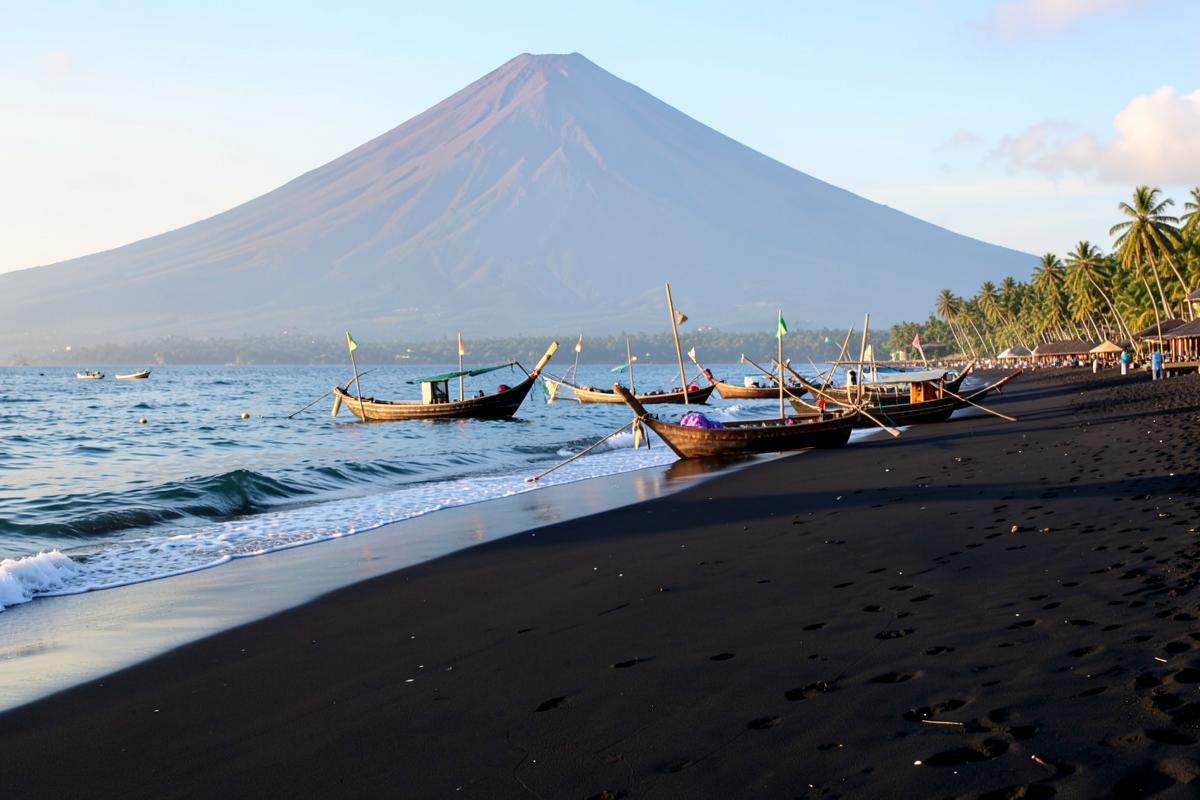
27 km · 45 min
Fishing village strung along black-sand bays, with jukung outriggers pulled up on the beach and easy shore snorkelling at Jemeluk.
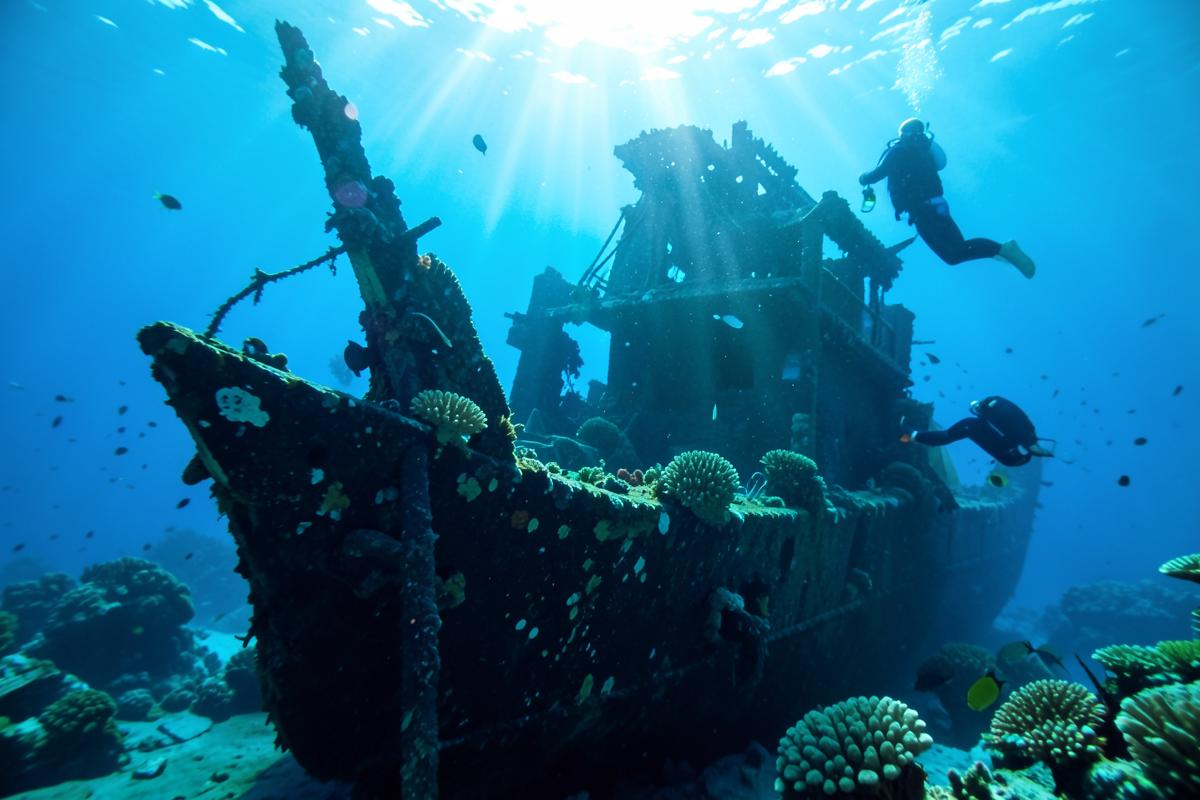
14 km · 25 min
The USAT Liberty wreck lies a short swim from shore — one of the world's most accessible wreck dives, and snorkellable in calm conditions.
38 km · 1 h
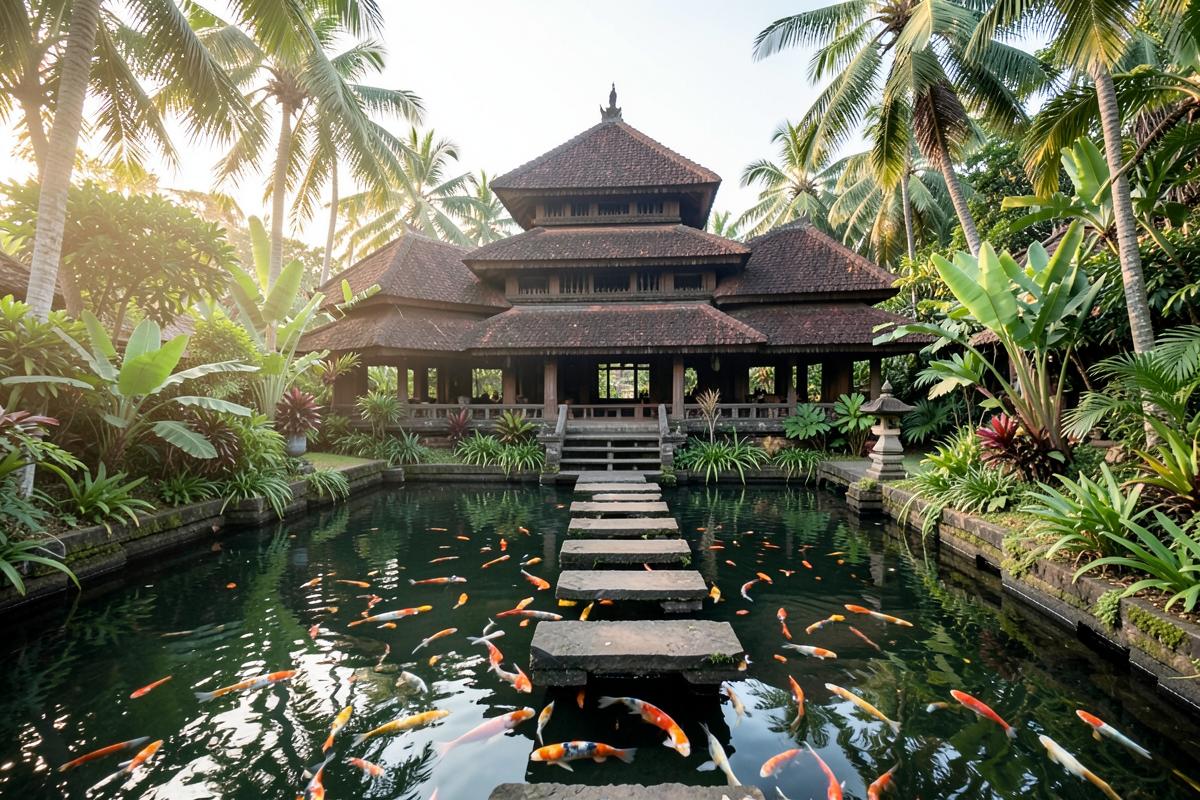
The former royal water garden with its stepping stones and koi pools. Best in the late afternoon once the tour buses thin out.
Every photograph on this page was shot on location by BaliLens. If you'd like the same light with you in the frame, here's what's on offer — no obligation at all. The guide above stands on its own.
Ask about availability on WhatsAppIndicative pricing. No deposit taken until dates are confirmed.
from IDR 5,000,000
5 hours · Savana Tianyar + Tirta Gangga
Aerial coverage of the savanna and water palace, subject to weather and local flight rules.
It lies along the coast road in Tianyar, Kubu district, Karangasem, in far north-east Bali. Roughly 2 h 15 m from Ubud, 45 minutes from Amed, about 1 h 30 m from Lovina and 3 hours from Canggu, Seminyak or Kuta.
Yes, if you like open landscapes, sunrise photography and quiet places. It is the only savanna-like grassland on Bali, it is free, and it pairs naturally with Amed, Tulamben and Tirta Gangga in one day trip. It is not a resort attraction — there are no facilities, so come prepared.
No. You can drive or ride in and walk the tracks freely. A driver or local guide is only useful if you want a full East Bali loop in one day or want to be shown the less obvious viewpoints before sunrise.
No. Savana Tianyar is open community and grazing land with no ticket office. Residents sometimes collect a small parking donation of around Rp 10,000–20,000, which is worth paying.
May to October, the dry season, when the grass is copper-gold and mornings are clear. February to April is green after the rains and much quieter, but clouds often hide Mount Agung.
Yes, in dry weather. The coast road is sealed and in good condition; the access tracks into the grassland are loose gravel and sand, so ride slowly and park on firm ground.
There is no local ban, but you must follow Indonesian civil aviation rules, stay under 120 m, keep clear of people and livestock, and never fly toward Mount Agung's exclusion zone during volcanic alerts.
Two hours covers the main spots comfortably at a walking pace. Photographers usually want three, arriving before first light and leaving as the heat builds.
None at the savanna itself. The nearest warungs, fuel and toilets are in Tianyar village and Kubu, a few minutes along the coast road.
Generally yes. Wear closed shoes for the sharp dry grass, carry more water than you think you need, watch for free-roaming cattle, and don't walk out alone in the dark without a torch.